Handcrafted vs Machine-Made Leather Goods: Quality Differences Explained
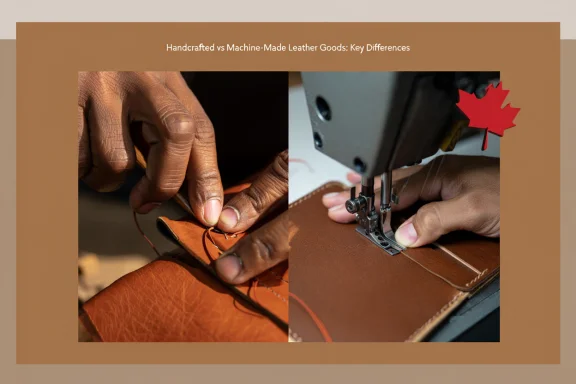
When it comes to leather goods—wallets, belts, bags—Canadians have plenty of options. Some products are handcrafted in small workshops, while others are mass-produced in factories. Both have their place, but the differences in quality, durability, and long-term value are worth exploring before you make your next purchase.
What Defines Handcrafted Leather Goods
Handcrafted leather items are created by artisans using traditional techniques, often in small batches. In Canadian workshops, each piece is cut, stitched, and finished by hand, ensuring a level of care that machines simply can’t replicate.
Key features:
-
Hand-cut patterns with attention to detail
-
Saddle stitching, which is stronger than machine stitching
-
Customization options (personalized initials, unique finishes)
-
Use of premium materials, such as full-grain vegetable-tanned leather
Example: A Toronto artisan might spend hours crafting a single bespoke wallet, checking every stitch for precision.
What Defines Machine-Made Leather Goods
Machine-made items are mass-produced in factories, often overseas, where efficiency and scale drive production. While not always low-quality, they are designed for speed and affordability.
Key features:
-
Automated cutting and stitching
-
Uniform, standardized designs
-
Often use lower-grade leather (top-grain or “genuine” leather)
-
Affordable price points for wider markets
Example: A department store belt made in bulk may look polished at first but wear out faster than a handcrafted alternative.
Durability and Longevity
This is where the biggest differences appear:
-
Handcrafted: Stronger stitching, thicker hides, and careful finishing mean these products often last decades, developing a beautiful patina over time.
-
Machine-made: While convenient and inexpensive, they’re more prone to fraying, cracking, or breaking after a few years of heavy use.
Remember: A handcrafted bag may cost more upfront but could outlast three or four machine-made alternatives.
Value for Consumers
When Canadians choose between handcrafted and machine-made, they’re weighing price versus long-term value.
-
Handcrafted goods are an investment: higher initial cost but lower “cost-per-wear” over time. They also support local artisans and sustainable practices.
-
Machine-made goods provide accessibility: lower price points make leather products more affordable for everyday consumers, though at the expense of longevity.
Style and Personalization
Handcrafted pieces often reflect the artisan’s creativity, with subtle variations that make each item unique. Machine-made goods, on the other hand, are consistent and predictable—ideal for buyers who prefer uniformity.
Customization is where handcrafted leather shines: initials, embossing, custom colours, or even made-to-measure designs are common in Canadian workshops.
Environmental Considerations
Sustainability is another factor. Many Canadian artisans use eco-friendly tanning methods and minimize waste. Machine-made mass production often generates more environmental impact due to chemical tanning and global shipping.
Conclusion
Handcrafted and machine-made leather goods both serve different consumer needs. If you’re after long-term quality, personalization, and heritage, handcrafted is the way to go. If affordability and accessibility are priorities, machine-made goods may be a practical choice.
Next time you’re shopping for a wallet or bag, ask yourself: do you want a quick buy—or a lifetime companion? Visit a Canadian artisan workshop to see the difference firsthand.