The Psychology Behind Decision-Making: How Emotions Drive Choices
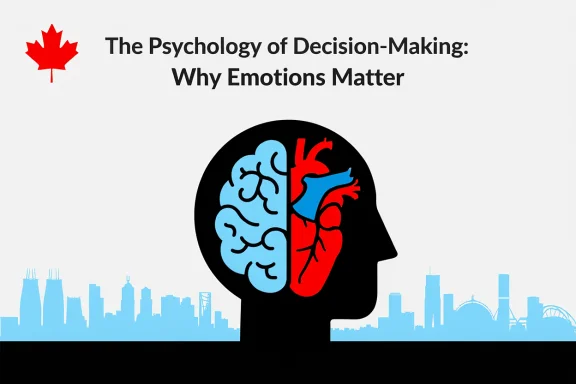
Picture yourself at a Canadian grocery store in February, standing between two maple syrup bottles—one on sale, the other in a fancier bottle. Which do you choose? Odds are, your decision won’t be purely logical. That’s because emotions play a huge role in how humans make choices, from small purchases to life-changing commitments.
Why Emotions Influence Decisions
For decades, psychologists believed decision-making was a rational process, but modern research shows emotions often take the driver’s seat. Nobel Prize winner Daniel Kahneman’s work highlighted that people rely on mental shortcuts (heuristics) and emotional triggers, even when they think they’re being rational.
Emotions impact choices in everyday Canadian life:
-
Fear can push someone to buy extra insurance for a ski trip in Whistler.
-
Excitement may lead to impulsively joining a new gym in Toronto.
-
Guilt might nudge a consumer toward sustainable products, like eco-friendly leather goods.
Common Emotional Biases
Several patterns show how emotions cloud rational thinking:
-
Loss aversion: Canadians often fear losing more than they value gaining—explaining why many hesitate to sell declining investments.
-
Confirmation bias: We favour information that supports what we already believe, whether it’s about hockey strategies or political views.
-
Social proof: If “everyone” in Montreal is lining up for a new café, chances are we’ll want to try it too.
-
Framing effect: Choices sound different depending on wording—“90% fat-free” feels better than “10% fat.”
Strategies to Minimize Emotional Bias
While emotions can’t (and shouldn’t) be eliminated from decisions, awareness helps create balance.
Practical methods:
-
Pause before reacting: Waiting 24 hours before making big purchases helps calm emotional surges.
-
Seek outside perspective: Talking through decisions with a colleague, coach, or family member brings fresh rational input.
-
Use data and benchmarks: Whether investing or choosing a training plan, look at numbers, not just gut feelings.
-
Write it down: Pros and cons lists make decisions more objective.
-
Limit decision fatigue: Too many small daily choices drain willpower—streamline routines where possible.
Example: Canadian athletes increasingly rely on sports analytics (see Own the Podium programs) to avoid emotional bias in training—using data ensures decisions are performance-driven, not based on “how it feels today.”
When Emotions Help
Not all emotional influence is negative. Empathy, joy, and passion can lead to better long-term decisions, like supporting local businesses or choosing a career path that aligns with personal values. In Canada’s diverse and community-oriented culture, emotional connection often drives positive social outcomes.
Conclusion
Emotions shape decisions more than we realize, often steering us toward choices that feel right rather than purely logical. By learning to recognize common biases and applying strategies to manage them, Canadians can make smarter, more balanced decisions—whether at the store, in business, or in life.
Next time you face an important choice, take a step back—ask yourself: “Am I deciding with my head, my heart, or both?” The answer might surprise you.