Traditional vs Modern Leather Working Tools: A Comparison
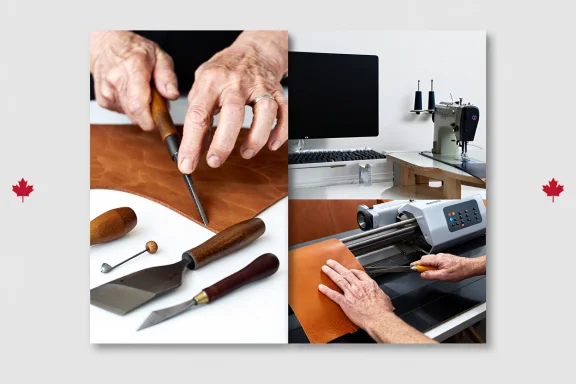
Walk into any established leather workshop in Montreal’s old industrial quarter and you’ll witness a fascinating blend of centuries-old hand tools alongside cutting-edge technology. Master craftsmen seamlessly transition from hand-stitching with traditional awls to programming computerized cutting machines, creating products that honor heritage while embracing innovation. This evolution of leather working tools tells the story of craftsmanship adapting to modern demands while preserving the essential human touch that defines quality leather goods.
The debate between traditional and modern leather working approaches isn’t about choosing sides – it’s about understanding how different tools serve different purposes in creating exceptional leather products. Canadian artisans have become particularly skilled at this balance, combining Old World techniques learned from immigrant craftsmen with New World innovation developed in our modern manufacturing centers.
Evolution of Leather Working Tools Through History
Pre-Industrial Hand Tool Development
Traditional leather working tools evolved over millennia to perform specific functions that remain largely unchanged despite technological advances.
Ancient tool foundations:
- Bone and stone implements: Earliest leather working tools from Paleolithic hunting cultures
- Bronze and iron advancement: Metal tools enabling more precise and efficient work
- Regional specialization: Different cultures developing unique tool designs for local needs
- Guild standardization: Medieval trade organizations establishing tool quality standards
- Colonial adaptation: European tools modified for New World leather resources
Traditional tool categories:
- Cutting implements: Hand-forged knives designed for specific leather cutting applications
- Shaping tools: Mallets, forming blocks, and specialized devices for three-dimensional work
- Stitching equipment: Awls, needles, and thread management tools for joining leather pieces
- Finishing implements: Burnishing tools, edge slickers, and surface treatment devices
- Measuring instruments: Rulers, dividers, and marking tools ensuring precision and consistency
Industrial Revolution Impact on Leather Craftsmanship
The mechanization of manufacturing transformed leather working from purely hand-based craft to hybrid production methods combining human skill with machine precision.
Key technological developments:
- Steam-powered machinery: First mechanized leather cutting and forming equipment
- Precision manufacturing: Machine-made tools with consistent quality and dimensions
- Mass production capability: Tools designed for higher volume leather goods production
- Material science advances: New tool materials improving durability and performance
- International trade: Global availability of specialized tools and materials
Canadian industrial leather development:
- Resource availability: Abundant timber and metal resources supporting tool manufacturing
- Immigration influence: European craftsmen bringing traditional techniques to Canadian workshops
- Regional specialization: Different provinces developing expertise in specific leather working areas
- Export market development: Canadian tools and techniques influencing international markets
Traditional Hand Tools: Timeless Precision and Versatility
Essential Traditional Cutting Tools
Hand cutting tools remain fundamental to quality leather work because they provide tactile feedback and precision that machines cannot duplicate.
Round knives and head knives:
- Advantages: Superior control for curved cuts and complex shapes
- Applications: Cutting leather pieces requiring artistic interpretation
- Skill requirements: Years of practice needed for consistent, precise results
- Maintenance: Regular sharpening and careful handling essential
- Cost factor: High-quality traditional knives represent significant investment
Specialized cutting implements:
- Strap cutters: Consistent width cutting for belts and straps
- Corner rounders: Precise radius cutting for professional finishing
- Skiving knives: Tapering leather edges for seamless joining
- Clicker dies: Hand-operated cutting dies for repeated shapes
- Draw gauges: Marking consistent measurements for cutting lines
Traditional Stitching and Assembly Tools
Hand stitching creates stronger, more durable seams than machine stitching while allowing artistic expression in leather joining techniques.
Awls and stitching accessories:
- Advantages: Complete control over stitch placement and tension
- Versatility: Ability to stitch in confined spaces and complex angles
- Durability: Hand-stitched seams often outlast machine alternatives
- Customization: Adjustable stitch spacing and pattern variations
- Repair capability: Easy field repair of hand-stitched construction
Traditional stitching techniques:
- Saddle stitching: Two-needle technique creating locked stitches
- Running stitch: Simple through-stitch for basic leather joining
- Backstitch: Reinforced stitching for high-stress applications
- Decorative stitching: Artistic techniques adding visual interest
- Cultural variations: Regional stitching styles reflecting local traditions
Surface Treatment and Finishing Tools
Traditional finishing tools create surface textures and treatments that give leather distinctive character and protection.
Edge finishing implements:
- Bone folders: Smoothing and shaping leather edges and seams
- Edge slickers: Creating polished, professional edge finishes
- Burnishing tools: Heat and friction tools for glossy edge treatments
- Modeling tools: Shaping and texturing leather surfaces
- Stamping implements: Creating decorative patterns and textures
Traditional advantages:
- Tactile feedback: Direct feel for leather response and optimal pressure
- Infinite adjustability: Continuous control over pressure, speed, and technique
- Artistic expression: Human creativity and interpretation in finishing work
- Quality consistency: Experienced craftsmen achieving superior results
- Repair and maintenance: Simple tools easily maintained and repaired
Modern Technology in Leather Working
Computer-Controlled Cutting Systems
Modern cutting technology dramatically improves material utilization while maintaining precision that rivals hand cutting for many applications.
CNC leather cutting advantages:
- Material efficiency: Computer nesting reduces waste by 15-30% compared to hand cutting
- Consistency: Every piece cut to exact specifications without variation
- Speed: Complex cutting patterns completed in minutes rather than hours
- Documentation: Digital files preserve cutting patterns for future reproduction
- Integration: Seamless connection to design software and inventory management
Cutting technology types:
- Water jet cutting: High-pressure water streams for precise, clean cuts
- Laser cutting: Concentrated light beams creating sealed edges and intricate details
- Ultrasonic cutting: Vibrating blades reducing friction and improving cut quality
- Drag knife systems: Computer-controlled blade following digital patterns
- Automated nesting: Software optimization maximizing material utilization
Modern Stitching and Assembly Equipment
Contemporary stitching machines offer speed and consistency while modern versions maintain the quality characteristics of traditional hand work.
Industrial sewing machine evolution:
- Programmable stitching: Computer control over stitch length, tension, and patterns
- Automatic thread cutting: Eliminating manual finishing steps
- Pattern memory: Storing complex stitching sequences for consistent reproduction
- Tension monitoring: Automatic adjustment maintaining optimal stitch quality
- Speed variation: Variable speed control for different leather types and thicknesses
Specialized modern equipment:
- Walking foot machines: Even feeding preventing leather distortion during stitching
- Post bed machines: Cylindrical work surface for three-dimensional stitching
- Automatic bartacking: Reinforcement stitching at stress points
- Embroidery systems: Computer-controlled decorative stitching capabilities
- Ultrasonic welding: Heat-free joining techniques for synthetic materials
Digital Design and Pattern Making
Computer-aided design revolutionizes leather pattern development and modification processes.
CAD software advantages:
- Precision drafting: Exact measurements and perfect curves in digital patterns
- Easy modification: Quick pattern adjustments for size or design changes
- Version control: Complete history of pattern development and modifications
- Scaling capabilities: Automatic size grading for different product sizes
- Integration potential: Direct connection to cutting and manufacturing equipment
Digital pattern benefits:
- Storage efficiency: Thousands of patterns stored digitally without physical space
- Sharing capability: Instant pattern transmission between locations and partners
- Backup security: Digital patterns cannot be lost or damaged like physical templates
- Collaboration tools: Multiple designers working on pattern development simultaneously
- Cost reduction: Eliminated physical pattern storage and handling costs
Advantages and Limitations: Side-by-Side Analysis
Traditional Tool Advantages
Hand tools continue offering unique benefits that modern technology cannot fully replicate in quality leather craftsmanship.
Precision and control benefits:
- Tactile feedback: Direct sensing of leather characteristics during work
- Infinite adjustment: Continuous control over pressure, angle, and technique
- Material adaptation: Real-time adjustment to leather variations and characteristics
- Artistic expression: Human creativity and interpretation in craftsmanship decisions
- Quality detection: Immediate recognition of problems or material defects
Economic and practical advantages:
- Lower initial investment: Basic hand tools cost significantly less than machinery
- Minimal operating costs: No electricity, maintenance contracts, or software licensing
- Portability: Hand tools enabling work in any location without infrastructure
- Longevity: Quality hand tools lasting decades with proper care and maintenance
- Independence: No reliance on external support, updates, or technical assistance
Modern Technology Advantages
Contemporary equipment offers capabilities that significantly enhance productivity and consistency in leather manufacturing.
Efficiency and speed benefits:
- Production volume: Modern equipment producing 5-10x more output per hour
- Consistency: Every piece meeting exact specifications without human variation
- Documentation: Complete records of production processes and quality metrics
- Integration: Seamless workflow from design through finished product delivery
- Scalability: Easy expansion of production capacity through additional equipment
Quality and precision advantages:
- Measurement accuracy: Digital precision exceeding human measurement capabilities
- Repeatability: Exact reproduction of previous work without variation
- Complex patterns: Intricate designs impossible to execute consistently by hand
- Material optimization: Computer analysis maximizing material utilization efficiency
- Quality monitoring: Real-time detection of problems and automatic adjustments
Limitations and Challenges of Each Approach
Traditional tool limitations:
- Production speed: Hand work requiring significantly more time per piece
- Physical demands: Repetitive hand work causing fatigue and potential injury
- Skill requirements: Years of training needed for consistent professional results
- Consistency challenges: Human variation creating product differences
- Scalability limits: Physical constraints on production volume expansion
Modern technology limitations:
- Initial investment: Equipment costs ranging from thousands to hundreds of thousands
- Maintenance requirements: Regular service, repairs, and technical support needs
- Flexibility constraints: Difficulty adapting to non-standard or creative work
- Skill displacement: Risk of losing traditional craftsmanship knowledge
- Technology dependence: Vulnerability to equipment failure and software issues
Hybrid Approaches: The Best of Both Worlds
Strategic Tool Integration
Successful modern leather workshops combine traditional and modern tools strategically, using each approach where it provides optimal results.
Production workflow integration:
- Design phase: CAD software for pattern development and modification
- Cutting phase: CNC equipment for high-volume, consistent cutting
- Assembly phase: Hand stitching for visible seams, machine stitching for hidden work
- Finishing phase: Hand tools for surface treatment and final quality control
- Quality assurance: Human inspection with traditional assessment techniques
Decision-making criteria:
- Volume requirements: High-volume work favoring modern equipment efficiency
- Quality expectations: Premium work requiring traditional hand-finishing techniques
- Cost considerations: Balancing labor costs against equipment investment
- Timeline constraints: Modern equipment for tight deadlines, hand work for quality
- Customer preferences: Market positioning influencing tool selection decisions
Canadian Workshop Integration Examples
Canadian leather artisans have become particularly skilled at balancing traditional and modern approaches based on practical business needs.
Ontario urban workshops:
- Fashion accessories: Modern cutting with traditional hand-finishing for premium positioning
- Corporate gifts: Efficient production with hand-personalization for individual touches
- Repair services: Traditional techniques for restoration work on vintage pieces
- Custom orders: Hand work for unique designs, modern tools for component production
Western Canadian outdoor gear:
- Functional design: Modern tools for technical accuracy in outdoor equipment
- Durability focus: Traditional stitching techniques for maximum strength
- Weather resistance: Modern materials with traditional construction methods
- Field repair: Traditional techniques enabling customer self-maintenance
Quebec artisan integration:
- Cultural heritage: Traditional techniques preserving regional craftsmanship traditions
- Modern efficiency: Contemporary tools supporting traditional design aesthetics
- Apprentice training: Teaching both traditional and modern techniques for complete skill sets
- Market adaptation: Flexible tool use based on customer requirements and market demands
Training and Skill Development Considerations
Traditional Skill Preservation
Maintaining traditional leather working skills requires dedicated effort in an increasingly automated world.
Apprenticeship programs:
- Master-apprentice relationships: Direct knowledge transfer from experienced craftsmen
- Hands-on learning: Practical experience developing muscle memory and judgment
- Cultural context: Understanding historical techniques and their modern applications
- Quality standards: Learning to recognize and achieve traditional excellence benchmarks
- Tool maintenance: Proper care and maintenance of traditional implements
Skill development challenges:
- Time investment: Traditional skills requiring years of practice for proficiency
- Economic pressure: Market demands for faster production challenging traditional methods
- Knowledge transfer: Aging craftsmen needing to pass skills to younger generations
- Cultural relevance: Maintaining interest in traditional techniques among modern workers
- Quality appreciation: Educating consumers about traditional craftsmanship value
Modern Technology Training
Contemporary leather working requires different skill sets combining technical knowledge with traditional craftsmanship understanding.
Technical skill requirements:
- Software proficiency: CAD programs, cutting software, and machine programming
- Equipment operation: Safe, efficient use of complex machinery and systems
- Troubleshooting: Problem diagnosis and resolution for technical equipment
- Maintenance procedures: Routine care ensuring optimal equipment performance
- Quality control: Using modern tools for consistent quality measurement
Hybrid skill development:
- Technology integration: Combining traditional knowledge with modern capabilities
- Adaptive thinking: Selecting appropriate tools for specific applications
- Quality judgment: Maintaining traditional quality standards using modern methods
- Efficiency optimization: Maximizing productivity while preserving craftsmanship quality
- Innovation capability: Developing new techniques combining traditional and modern approaches
Economic Considerations in Tool Selection
Investment Analysis for Leather Workshops
Tool selection decisions significantly impact workshop profitability and long-term business sustainability.
Traditional tool economics:
- Lower initial investment: Basic hand tool sets costing $2,000-8,000
- Higher labor costs: Skilled craftsmen commanding premium wages
- Limited production volume: Output constraints affecting revenue potential
- Premium pricing opportunity: Hand-crafted goods justifying higher selling prices
- Lower overhead costs: Minimal ongoing expenses for maintenance and operation
Modern equipment economics:
- Higher initial investment: Professional equipment ranging $15,000-200,000+
- Lower labor costs per unit: Reduced skilled labor requirements for production
- Higher production volume: Significant output increases supporting revenue growth
- Competitive pricing pressure: Mass production competing on price efficiency
- Ongoing operational costs: Maintenance, software, and technical support expenses
Return on Investment Calculations
Understanding financial returns helps workshops make informed tool selection decisions based on business objectives.
Traditional approach ROI:
- Premium market positioning: Hand-crafted goods commanding 200-500% price premiums
- Lower production costs: Minimal overhead supporting higher profit margins
- Market differentiation: Traditional techniques creating competitive advantages
- Customer loyalty: Craftsmanship appreciation supporting repeat business
- Limited scalability: Growth constraints affecting long-term revenue potential
Modern equipment ROI:
- Volume efficiency: Equipment costs justified through increased production capacity
- Consistency value: Reduced waste and rework improving overall profitability
- Market expansion: Efficient production enabling broader market access
- Competitive positioning: Modern capabilities required for certain market segments
- Scalability potential: Equipment supporting business growth and expansion
Regional Canadian Tool Preferences and Adaptations
Atlantic Canada: Traditional Heritage Focus
Maritime leather traditions emphasize hand tools and techniques passed down through generations of craftsmen.
Regional characteristics:
- Cultural preservation: Strong emphasis on maintaining traditional techniques
- Tourism markets: Hand-crafted goods appealing to heritage-conscious visitors
- Small-scale production: Traditional tools suitable for boutique workshop operations
- Seasonal variation: Flexible hand-tool approaches adapting to seasonal demand changes
- Community tradition: Local appreciation for traditional craftsmanship methods
Modern adaptations:
- Selective modernization: Adopting specific modern tools while preserving traditional techniques
- Efficiency improvements: Modern tools supporting traditional quality standards
- Documentation preservation: Digital recording of traditional techniques and patterns
- Training programs: Teaching traditional skills using modern documentation methods
Ontario: Industrial Innovation Leadership
Central Canada’s manufacturing centers lead in integrating modern technology with traditional craftsmanship quality standards.
Technology adoption patterns:
- Comprehensive integration: Full workflow modernization from design to finishing
- Innovation development: Canadian companies developing new leather working technologies
- Efficiency optimization: Modern tools supporting competitive manufacturing costs
- Export markets: Technology enabling Canadian products to compete internationally
Quality maintenance:
- Hybrid approaches: Modern efficiency with traditional quality control methods
- Skilled workforce: Training programs developing comprehensive technical skills
- Quality standards: International certification programs ensuring consistent excellence
- Continuous improvement: Regular evaluation and upgrade of tool capabilities
Western Canada: Practical Functionality Focus
Prairie and mountain regions emphasize tools and techniques that support functional, durable leather goods for outdoor applications.
Practical considerations:
- Durability requirements: Tools capable of creating robust, weather-resistant products
- Field maintenance: Traditional techniques enabling customer product maintenance
- Seasonal demands: Equipment capable of handling seasonal production variations
- Transportation challenges: Portable tools suitable for remote location work
Innovation areas:
- Weather resistance: Modern materials and techniques improving outdoor performance
- Repair techniques: Traditional methods enabling field repair of modern products
- Testing equipment: Modern tools ensuring products meet extreme condition requirements
- Documentation systems: Digital tracking of performance and durability testing
Future Trends in Leather Working Tools
Technology Evolution Predictions
Emerging technologies will continue transforming leather working while preserving essential craftsmanship elements.
Anticipated developments:
- AI-assisted design: Computer intelligence supporting creative pattern development
- Robotic assistance: Automated systems handling repetitive tasks while preserving human creativity
- Smart tools: Traditional tools enhanced with digital feedback and measurement capabilities
- Virtual reality training: Immersive learning environments for skill development
- Sustainable technology: Equipment designed for environmental responsibility
Traditional technique preservation:
- Digital documentation: Comprehensive recording of traditional techniques and knowledge
- Modern apprenticeships: Technology-enhanced learning of traditional skills
- Cultural programs: Government and industry support for traditional craft preservation
- Museum partnerships: Educational programs maintaining traditional knowledge
- International exchange: Global sharing of traditional techniques and innovations
Sustainability and Environmental Considerations
Future tool development increasingly focuses on environmental responsibility and sustainable production practices.
Sustainable tool development:
- Energy efficiency: Reduced power consumption in modern equipment
- Material recycling: Tools designed for disassembly and component reuse
- Durability focus: Longer-lasting tools reducing replacement frequency
- Local sourcing: Regional tool manufacturing reducing transportation impacts
- Renewable materials: Traditional tools using sustainably harvested materials
Environmental production techniques:
- Waste reduction: Modern cutting optimization minimizing leather waste
- Chemical alternatives: Traditional techniques reducing chemical processing requirements
- Renewable energy: Workshop power from solar, wind, and other renewable sources
- Carbon footprint: Tool selection considering overall environmental impact
- Circular economy: Designing tools and products for maximum lifecycle utilization
Conclusion: Embracing Evolution While Honoring Tradition
The evolution of leather working tools represents progress that enhances rather than replaces fundamental craftsmanship principles. Traditional hand tools preserve the human touch and artistic expression that defines quality leather goods, while modern technology provides efficiency, consistency, and capabilities that expand creative possibilities.
Canadian leather artisans have become masters of this balance, understanding that the best approach combines time-tested techniques with contemporary innovations. The most successful workshops use modern tools where they provide clear advantages – precision cutting, consistent stitching, efficient design – while preserving hand techniques where they create superior results – artistic finishing, quality control, creative problem-solving.
The future of leather working lies not in choosing between traditional and modern approaches, but in understanding how each serves the ultimate goal of creating beautiful, functional leather goods that honor both heritage and innovation. By mastering both traditional techniques and modern capabilities, today’s leather craftsmen create products that satisfy contemporary demands while preserving the timeless appeal of genuine handcrafted quality.
Whether you’re a craftsman selecting tools for your workshop or a consumer appreciating the work behind quality leather goods, understanding this evolution helps recognize the skill, knowledge, and careful decision-making that creates leather products worthy of lasting decades while developing beautiful character through years of use.
The tools may evolve, but the fundamental goal remains unchanged: creating leather goods that combine functional excellence with lasting beauty through the marriage of human skill, quality materials, and appropriate techniques – traditional, modern, or thoughtfully combined.